
On this page
Part 6 of 8 in the kitchen cleaning series
- Inspect weekly; clean filters every 3 to 5 weeks if you cook daily
- Spray stubborn grease with white vinegar, then soak again
As often as you may clean your kitchen, there’s always one or two things (if not more) that get overlooked. Could this be your rangehood and rangehood filter? There’s a good chance you answered that question with two yeses!
Now, it’s not necessary to clean these components each time you clean your kitchen, but they certainly require attention from time to time due to the grease and grime buildup they are prone to. This is in no way surprising when you consider the stove hood’s sole purpose.
What Does a Rangehood Do?

Fitted with an exhaust fan, the rangehood is an overhead kitchenette appliance that is installed above the stove. As the fan runs, it pulls greasy fumes and smoke into the duct and attached chimney which leads the smoke and strong odours out of your house.
Of course, like any appliance that encounters heavy smoke and fine particles, these kitchen pollutants are passed through the rangehood filter, trapping most of the grease before it coats the inside of the chimney. The filter, a stainless steel mesh sheet, plays an important role in keeping the air quality in your kitchen clean and fresh, eliminating grease stains that would otherwise find their way to other appliances and the kitchen cabinets.
Why You Should Clean the Rangehood and Filter
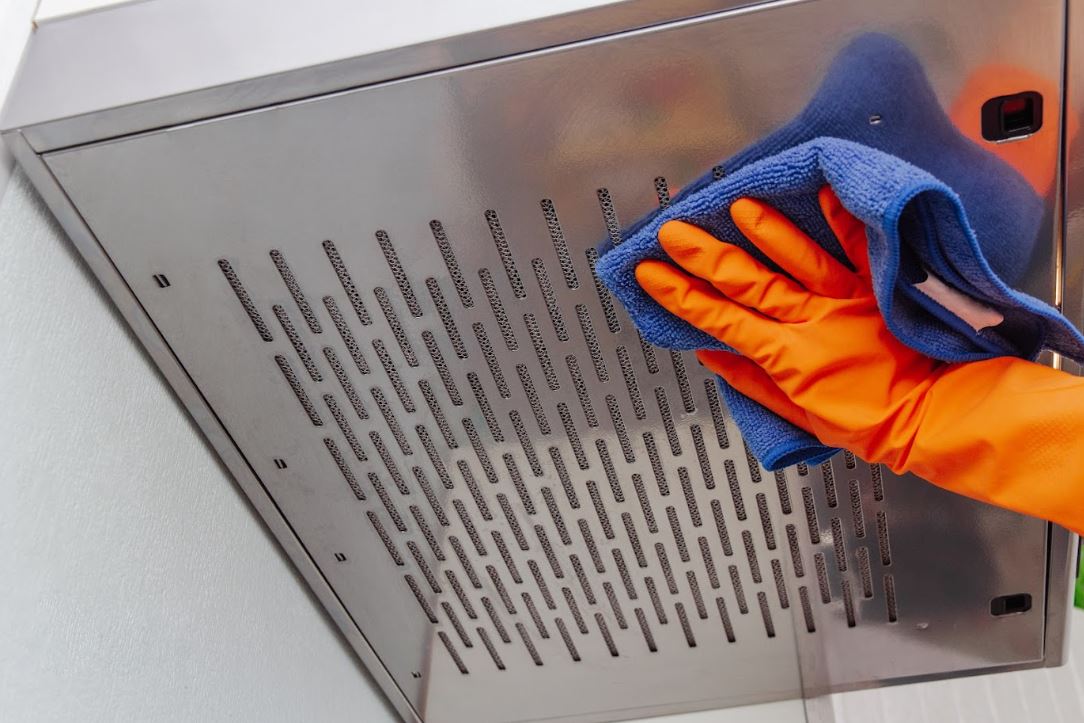
With all of the cooking smoke and fumes streamlined to the rangehood, the inside and exterior of the appliance gets caked with grease over time. Considering the sticky nature of cooking grease, one can only imagine how dirt, dust, and other grime cling to the layer that is formed on the surface of the appliance.
If you don’t address the buildup in a timely manner, it can cause blockages, foul odours, and bacteria growth. The rangehood filter, in particular, quickly gets clogged, and prevents smoke from passing through. This defeats the purpose of the rangehood, causing your kitchen to bear the brunt of greasy fumes and smoke all around.
How Often Does the Rangehood & Rangehood Filter Need Cleaning?
The frequency of cleaning the exterior, interior, and filter of the rangehood depends on a couple of factors. These include how often you use the stove to cook – whether on a daily basis, or a few times a week, and the types of dishes you cook – more fried/sizzling foods that cause airborne grease.
With that in mind, we advise inspecting the rangehood and rangehood filter at least once a week to determine whether there is enough buildup that warrants a deep clean. On average, mesh filters need to be cleaned every 3-5 weeks if you cook daily, and every 1-2 months for weekly cooking. Regular cleaning keeps the rangehood performing optimally while maintaining a clean and shiny appearance too!
How to Clean a Greasy Rangehood Interior & Exterior

Now that you are privy to the information above, let’s talk about the best way to remove grease from your rangehood, inside and outside! You can choose between using a commercial degreaser, or a homemade cleaning solution that gets the job done just as well.
For a truly DIY approach to clean a greasy stovehood, take a look below.
What You’ll Need

- Kitchen Gloves
- Grease-Cutting Dish Soap
- Warm Water
- Vinegar
- Baking Soda
- Microfibre Cloth
- Spray Bottle
- Soft-Bristled Dust Brush
- Medium-Bristled Scrub Brush
- Paper Towels
- Plastic Sheet/Old Bedsheet
Step-by-Step Instructions
After you have gathered the tools, materials, and cleaning agents above, follow the steps below to degrease and clean your dirty rangehood.
Step 1: Remove Dry Dust
This is where a dust brush is handy because it allows you to remove dust from the narrow spaces, edges, and corners inside the hood’s roof. Before you begin, however, lay down a plastic sheet or an old bedsheet (folded multiple times to create layers) that will serve as a barrier between the stovetop and dust and debris that fall from under the kitchen hood. Knock off as much dry dust from the interior of the hood before moving on to the next step.
Step 2: Clean the Exterior
To cut through the layer of grease on the outside of the stove hood, make a mild cleaning solution of warm water and dish soap. Pour this into a spray bottle and use it to dampen a paper towel (use multiple paper towels if needed). For excess grease buildup, a microfibre cloth is better suited for this task. Scrub the exterior surfaces until all the grease and dirt has been removed; then wipe over the area with a damp paper towel.
If there are remnants of grease clinging to the hood, mix equal parts of water and white vinegar, and dab the solution over the affected area using a clean cloth. Gently scrub the stain away, and dry the surface with a paper towel.
Step 3: Clean Under the Hood
First things first, take out the stove hood filter (we’ll tell you what to do with it later in this article). Once the filter has been detached, you will see just how much grease has accumulated under the hood.
To clean off the caked-on grease, baking soda is a great option as it breaks down the grime after neutralising the acidic compounds in cooking grease. For this, you will need to make a baking soda paste by combining the ingredient with water; then dip the scrub brush in the paste, and clean the exposed surfaces under the range hood. Finish off by wiping the surfaces clean with a clean damp cloth or paper towel.
How to Clean & Degrease a Rangehood Filter

Cleaning the filter of your kitchen hood is actually really simple. Again, you can choose a reliable degreaser for which you will have to follow the instructions on the label, or a quick, non-toxic method like the one we have shared below.
What You’ll Need
- Kitchen Gloves
- Grease-Cutting Dish Soap
- Hot Water
- Baking Soda
- Vinegar (Optional)
- Medium-Bristled Scrub Brush
- Paper Towels
Step-by-Step Instructions
Keep your kitchen gloves on because the filter is generally the greasiest and dirtiest component of the rangehood! When you are prepared to clean the filter, proceed with the following steps.
Step 1: Soak the Filter
Soaking removable greasy components is the easiest way to clean off grime as the cleaning solution breaks down and loosens the dirt. In this case, you will need to fill your kitchen sink or an old baking tray (large enough to submerge the filter) with hot water; then add ½ cup of baking soda, and 1 tablespoon of grease-fighting liquid dish soap. Stir the water to combine the ingredients well, and place the filter inside. Leave it submerged for at least 20 minutes.
Step 2: Brush it Clean
Using a clean scrub brush with firm (not hard) bristles, gently scrub the mesh to clean off the softened dirt and grime. Rinse the mesh under running water and continue scrubbing until the filter is completely unclogged and clean.
Step 3: Spray Stubborn Grease With Vinegar
If you aren’t satisfied with the result after soaking and brushing your rangehood filter, consider spraying stubborn grease stains with raw white vinegar, and then soaking the filter in a fresh cleaning solution made with hot water, baking soda, and dish detergent. After 10-15 minutes of soaking time, scrub the spots with the scrub brush until they vanish.
Step 4: Rinse Thoroughly & Dry
When you are finally happy with your grease-free stove hood filter, rinse it thoroughly under running water to remove loosened debris and traces of the cleaning solution. Follow this up by dabbing the mesh with paper towels to absorb as much moisture as possible. Leave the filter to air-dry on a rack thereafter. Wait until it is completely dry before clipping it back under the range hood.
| What you notice | What to do |
|---|---|
| Greasy film on the hood exterior | Wipe with warm water and dish soap, then a damp paper towel |
| Grease still clinging to the outside | Dab on equal parts water and white vinegar, scrub gently, dry |
| Caked-on grease under the hood | Remove the filter, scrub with baking soda paste, wipe clean |
| Clogged mesh filter | Soak 20 minutes in hot water, baking soda and dish soap, then brush |
| Stubborn grease left on the filter | Spray with white vinegar, re-soak 10 to 15 minutes, scrub |
When to call a professional
A rangehood that has gone months without attention can carry layers of grease under the hood and through the filter mesh, and shifting it takes hours of soaking and scrubbing. When the rest of the kitchen is in the same state, a deep clean deals with the rangehood, splashback and cabinets together.
Final Thoughts
Sometimes your rangehood may look clean on the outside but that doesn’t necessarily mean it isn’t due for a deep clean. Remember, the cooking fumes and airborne grease get pulled under the rangehood which is why you must inspect this area, along with the filter, at least once a week, or every two weeks if you don’t cook every day. When the interior, exterior, or filter of your kitchen hood appear greasy, use our simple grease removal methods to make them clean and shiny again, this will save you a lot of hassle. Our specialist cleaners can spend upwards of two hours alone cleaning our client’s rangehoods in really soiled end of lease cleans.