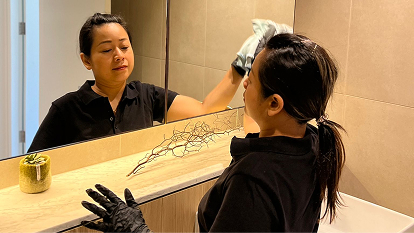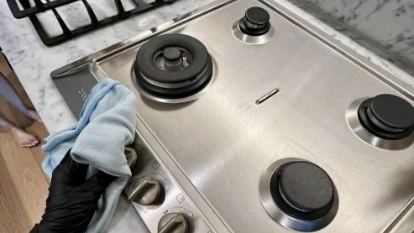

Stainless steel appliances are essential in modern kitchens, and for good reason. They look clean, professional, and timeless. The downside, however, is that they are prone to fingerprints, streaks, and water spots. Moreover, applying the wrong cleaning method to dirty stainless steel can end up making things worse.
What sometimes seems like a simple wipe-down can easily lead to smudging, dullness, or even permanent damage if abrasive tools and products are used. Therefore, using stronger cleaners isn’t the key to maintaining stainless steel; the right approach at the right time is what makes all the difference.
In this guide, MaidForYou breaks down exactly how to clean stainless steel safely, when to switch from regular maintenance to a deeper clean, and what to avoid entirely, especially if you’re preparing for an end of lease inspection.
Why Stainless Steel is So Hard to Keep Clean
One of the reasons why stainless steel is difficult to keep clean is due to its grain. Similar to wood, the grain runs in a specific direction and isn’t flat or uniform. This plays a major role in how the surface reflects light and how easily marks appear.
When you clean against the grain or use the wrong products, you can push dirt deeper into the texture or leave visible streaks across the surface. On top of this, stainless steel very easily shows oils from skin, which means fingerprints are a big issue considering the fact that these appliances are typically touched daily.
The most common marks seen on stainless steel appliances include:
- Fingerprints, especially on handles and high-touch areas
- Streaks, more visible under natural or overhead lighting
- Water spots from mineral residue
- Smudging caused by improper wiping or unsuitable cleaning solutions
Understanding how to deal with these issues begins with using the right cleaning approach for the problem at hand. Let’s dive into this.
Choosing the Right Cleaning Approach at the Right Time
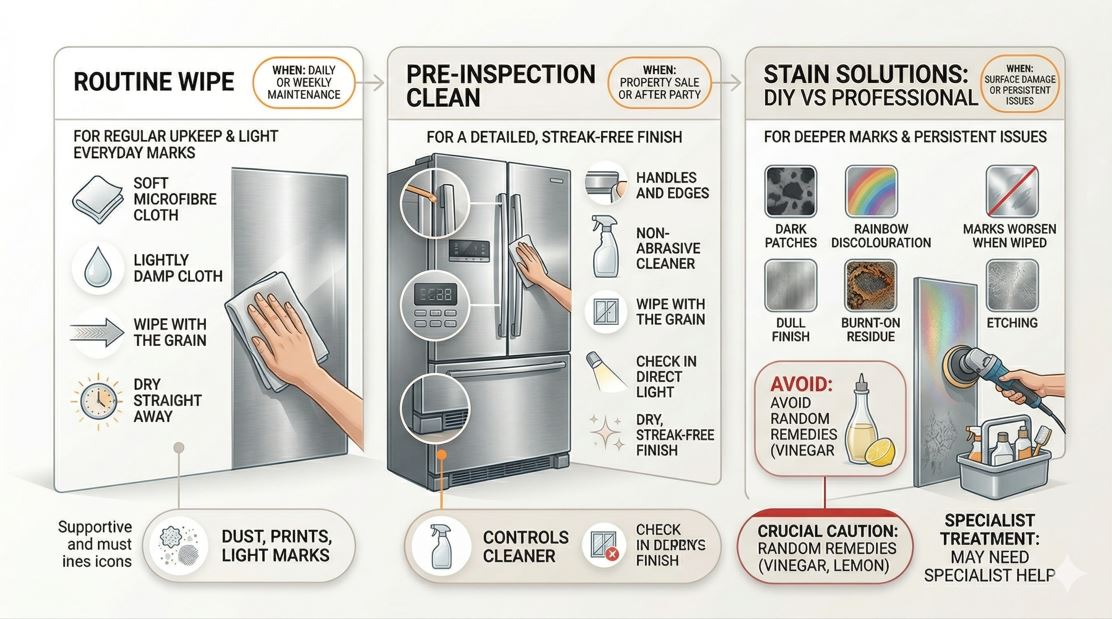
Not every stain or mark needs the same level of cleaning. In fact, one of the most common mistakes homeowners make is over-cleaning or using strong products in cases where a simple wipe would suffice.
To understand what type of cleaning your stainless steel requires and when, here’s a clear hierarchy of cleaning levels to refer to.
1. Routine Wipe
Daily or regular wipe-downs are a must to keep stainless steel looking consistently clean and preventing build-up. It will also reduce the chances of stains and grease hardening and sticking to the surface.
For routine maintenance, do the following:
- Use a soft, non-abrasive microfibre cloth
- Lightly dampen the cloth with water (purified water, as hard water will leave mineral deposits)
- Wipe the surface in the direction of the grain
- Dry immediately with a separate clean cloth to prevent water spots
This simple method removes surface dust, light fingerprints, and everyday marks without leaving residue or streaks. It’s also a safe approach for long-term stainless steel care.
2. Pre-Inspection Clean
When preparing for an end of lease inspection, attention to detail is critical. Stainless steel is one of the first places where poor or improper cleaning shows, especially under direct light. This is something property managers and agents don’t overlook, so it pays to give these appliances a detailed clean.
At this stage, the goal is not just to clean it, but to ensure a streak-free and residue-free finish.
Here’s what you need to focus on in particular:
- Handles and edges where fingerprints accumulate
- Oven and microwave control panels
- Areas around buttons or controls
- Lower sections of appliances where splashback, grease, and food build-up commonly occur
Use a minimal amount of a suitable, non-abrasive cleaner (we will discuss the right cleaners and tools for stainless steel later), apply it to the cloth and wipe with the grain. Most importantly, ensure the surface is completely dry and does not have a hazy finish. Lastly, be sure to inspect the surface under bright, direct light, as low lighting usually doesn’t show streaking or light smudges.
3. Stains: DIY vs Professional Cleaning
Some marks on stainless steel require advanced cleaning solutions to remove them safely and effectively. These stains may appear as dark patches that don’t lift with gentle cleaning, rainbow-like discolouration, marks that worsen when wiped, or overall surface dullness. Other issues include burnt-on residue and etching from harsh cleaning products.
When dealing with any of the above, it’s best not to experiment with household remedies or online cleaning trends. The wrong approach can permanently damage the finish, which is an even bigger problem if you live in a rental home.
Depending on the severity and cause of the issue, professional cleaning services or specialist treatment may be required. Therefore, if the scope of work goes beyond routine cleaning, it’s advisable to seek professional assistance.
Cleaning with the Grain: Why It Matters
One of the most important (and often overlooked) aspects of cleaning stainless steel is following the grain direction. If you haven’t noticed it before, you can identify the grain by looking closely at the surface, and you’ll see faint lines running either horizontally or vertically. It may not seem like a big deal, but it is very important to clean with the grain.
Some risks of cleaning against the grain include:
- Pushing dirt deeper into the surface, making it harder to remove
- Creating visible streaks that show even without direct light reflecting off the surface
- Fine scratches on the surface that become more visible with frequent cleaning against the grain
Even with the right product, the wrong motion can undo your efforts and cause unnecessary damage.
What Property Managers Actually Look For
When it comes to exit inspections, stainless steel appliances are assessed more minutely than many people think. Property managers don’t just look to see if the surface is ‘clean’; they often look for even the smallest of inconsistencies.
Some of the things agents usually check for are streaking, especially from overhead lighting or windows; oily residue left behind by polishing attempts; fingerprints on handles; smudges on oven and microwave control panels; unevenness in finish; or hazy patches.
Over-polishing is a common problem in rental homes. Due to a lack of knowledge in stainless steel care, tenants tend to apply too much product, especially oils or heavy cleaners, which leave a film that looks shiny at first, but the residue becomes more evident under lighting. In many cases, a lightly cleaned, properly dried surface will perform better than one that has been overly treated with the wrong products.
Red Flags: What to Avoid Completely
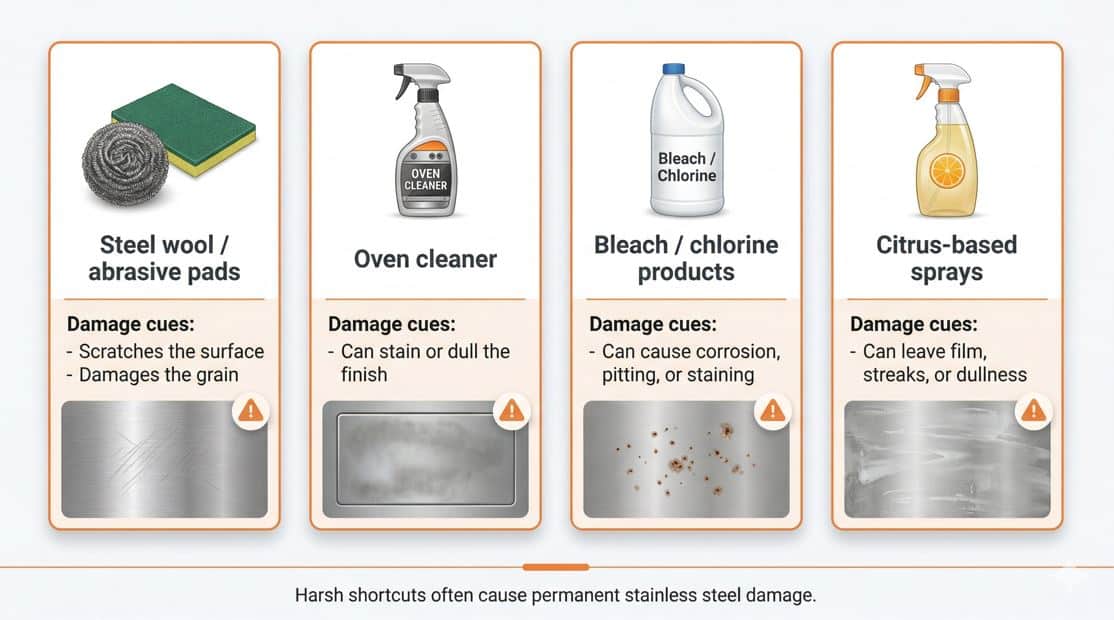
Certain cleaning products and tools can cause immediate or long-term damage to stainless steel. Some of the negative effects include permanent marking and discolouration. These issues can happen almost instantly and will only get worse when the wrong products are consistently used.
To ensure you don’t make the same mistake countless tenants have, here’s a list of what you absolutely should not use on stainless steel:
- Steel wool or abrasive pads: These scratch the surface and damage the grain, which is typically irreversible.
- Oven cleaner: Oven cleaning sprays contain harsh chemicals that can stain or dull stainless steel if they come into contact with it, even in minimal amounts.
- Bleach or chlorine-based products: These react with stainless steel and can cause corrosion, pitting, or staining.
- Citrus-based sprays: While often marketed as natural cleaners, these can leave films or react with the surface, resulting in streaking or dullness.
Sticking to gentle, controlled cleaning methods is far more effective than trying to take ‘shortcuts’ by using aggressive products.
The Right Cleaning Products for Stainless Steel
This can get tricky because not all products “recommended” for stainless steel provide the same results. In fact, some leave streaks, others create a film on the surface, and some simply don’t clean as well as others. Therefore, it helps to know exactly what to look for in a cleaning product when it comes to stainless steel appliances.
Key things to keep in mind when choosing a cleaner:
- Specially-formulated products for stainless steel surfaces
- Non-abrasive ingredients for delicate finishes
- Free from chlorine, bleach, or harsh chemicals
- Does not contain agents that leave an oily or waxy residue
Keep in mind that more product does not equal better results. In most cases, less is more for a clean and smooth finish.
How to Clean Stainless Steel Properly
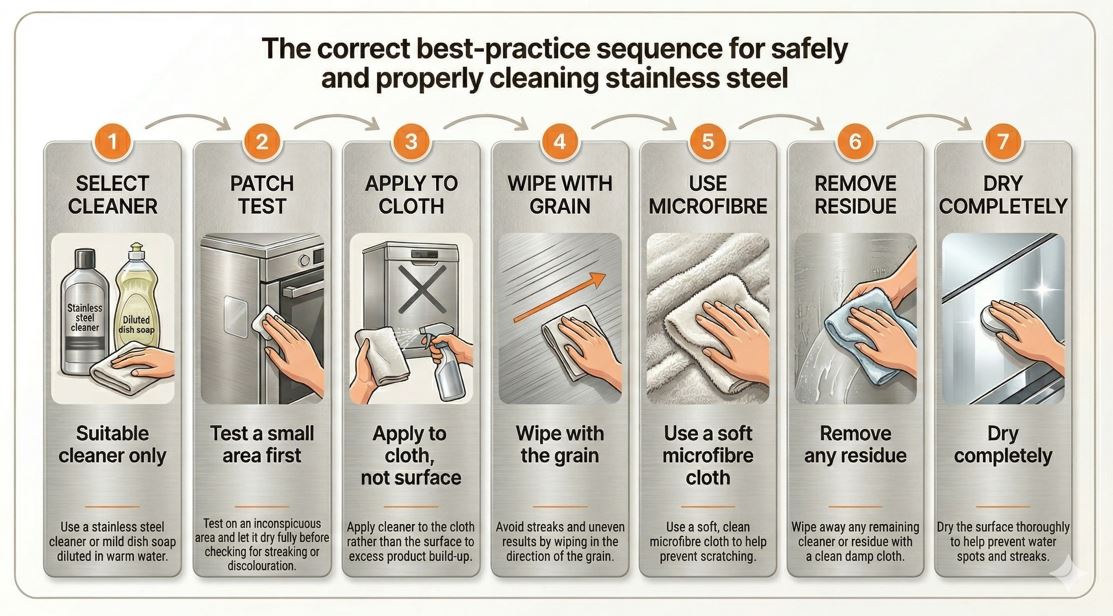
- Use a suitable cleaner
Use a cleaner specifically formulated for stainless steel, or a mild dish soap diluted in warm, purified water for routine cleaning. Both options should be non-abrasive and free from harsh chemicals.
- Test on a small area first
Apply the cleaner to an inconspicuous area and allow it to dry entirely before checking for streaking or discolouration.
- Apply the cleaner to the cloth, not the surface
This helps control the amount used and prevents excess product from building up.
- Wipe in the direction of the grain
Always follow the grain to avoid streaks and ensure an even finish.
- Use a soft microfibre cloth
Avoid abrasive materials that can scratch or damage the surface.
- Remove any residue
If you’re using soapy water, go over the surface again with a clean, damp cloth to remove any remaining film.
- Dry the surface thoroughly
Wipe the surface with a clean, dry cloth to prevent water spots and streaks.
Dirt vs Damage
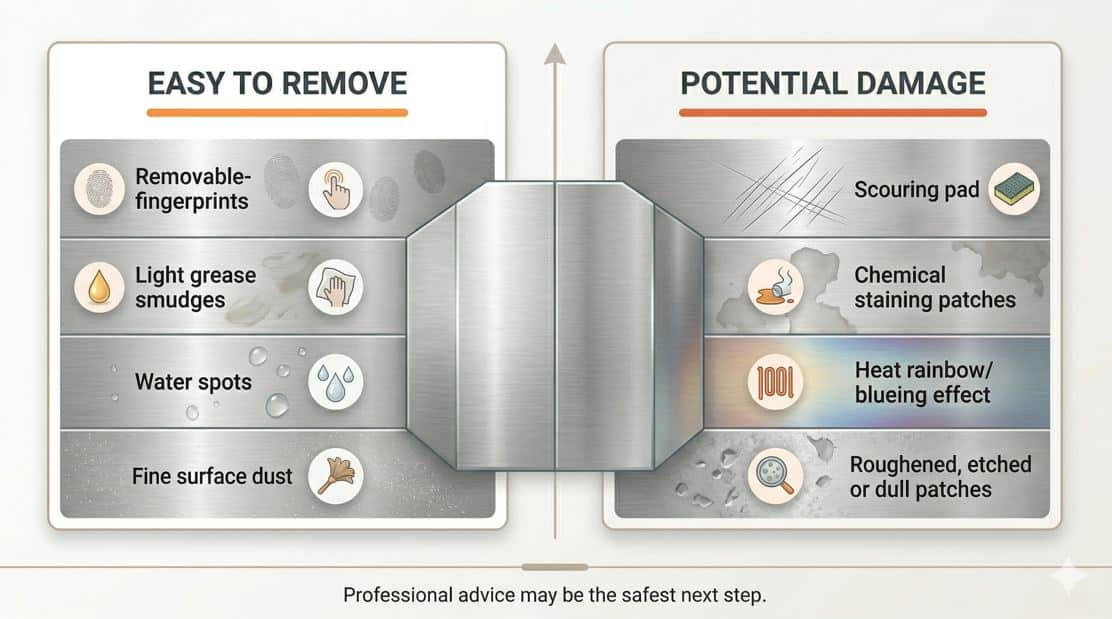
It’s important to understand the difference between marks that can be cleaned and issues that may be classified as permanent damage. This distinction can help you avoid wasting time on marks that standard cleaning methods simply won’t fix, while ensuring that you don’t make the problem worse with aggressive cleaning.
| Easy-to-Remove Dirt | Potential Irreversible Damage |
| Fingerprints | Scratches from abrasive tools |
| Light grease or smudges | Chemical staining (e.g. from bleach or oven cleaner) |
| Water spots | Heat discolouration |
| Surface dust | Etching or dull patches |
If the issue falls into the ‘damage’ category, standard cleaning won’t resolve it. In some cases, the only solution may be refinishing or replacing the affected surface. At this point, it’s a good idea to bring in a professional for advice on the best course of action.
A Note on End of Lease Cleaning
Stainless steel appliances are a common problem area during end of lease inspections because they highlight both cleaning quality and potential damage. So, if you’re preparing for a final inspection, it helps to understand what can realistically be improved through cleaning and what may require a different approach (refer to the table above).
For a comprehensive guide on preparing your home, including what property managers expect across all areas, see: How to Prepare for an End of Lease Clean (What Property Managers Actually Check).
Final Thoughts
For the best stainless steel care, regular cleaning is more effective than intensive cleaning. A simple yet effective routine involves using the right cloth, following the direction of the grain, and avoiding harsh products. This will keep your stainless steel appliances looking clean and prevent build-up so there’s no need for frequent deep cleaning.
The biggest issues tend to come from ‘overcleaning’, which includes using too many products, applying too much pressure, or treating stains or marks with abrasive cleaners and tools. The right approach is critical when caring for stainless steel, especially before a final inspection, as these surfaces are closely looked at for inconsistencies and often show up in the final report if they haven’t been properly maintained.
When you know the correct approach, stainless steel isn’t difficult to care for; it simply requires a little more caution and consideration than most surfaces.