
On this page
- A Contractor System That Makes Cleaners ‘Disposable’
- Lack of Training Pushes Cleaners Out
- Without Incentives, Motivation Drops
- How Cleaning Companies Pass Risk Down to Cleaners
- The Constant Fear of Not Being Paid
- Why Career Progression Is So Difficult
- Burnout Caused by Inconsistent Scheduling
- Why High Turnover Damages the Entire Industry
- What Needs to Change
- Final Thoughts
Data note: MaidForYou figures in this article come from our own records of the independent cleaning teams we have worked with since 2014, compiled by Delah Gomasi. Industry figures are from the public sources cited in the text.
The cleaning industry faces a major issue that’s rarely talked about, yet affects thousands of homeowners who choose to hire a professional cleaner. If you’ve ever experienced a ‘no-show’ for a cleaning appointment, or loved the work of an individual cleaner only to find you couldn’t hire them again, there’s a very good chance they’ve left the cleaning industry altogether.
Across Australia, statistics show that the average cleaner leaves the industry within 12 to 14 months. Some even leave earlier, while only a small number last longer. This isn’t normal, nor is it sustainable.
On the outside looking in, it may seem like this is happening because cleaners are ‘unprofessional’ or unwilling to work hard, but that’s rarely the case. At MaidForYou, we regularly speak with cleaners who come to us after working for other companies and hear an entirely different story. Most cleaners start out feeling optimistic, motivated, and determined to work. Sadly, many have negative experiences, especially with their previous provider, leaving them exhausted, disappointed, and financially strained.
The economics of the cleaning industry are broken, and cleaners are the ones bearing the brunt of it. In today’s blog, we’re explaining why that’s happening and what needs to change.
A Contractor System That Makes Cleaners ‘Disposable’
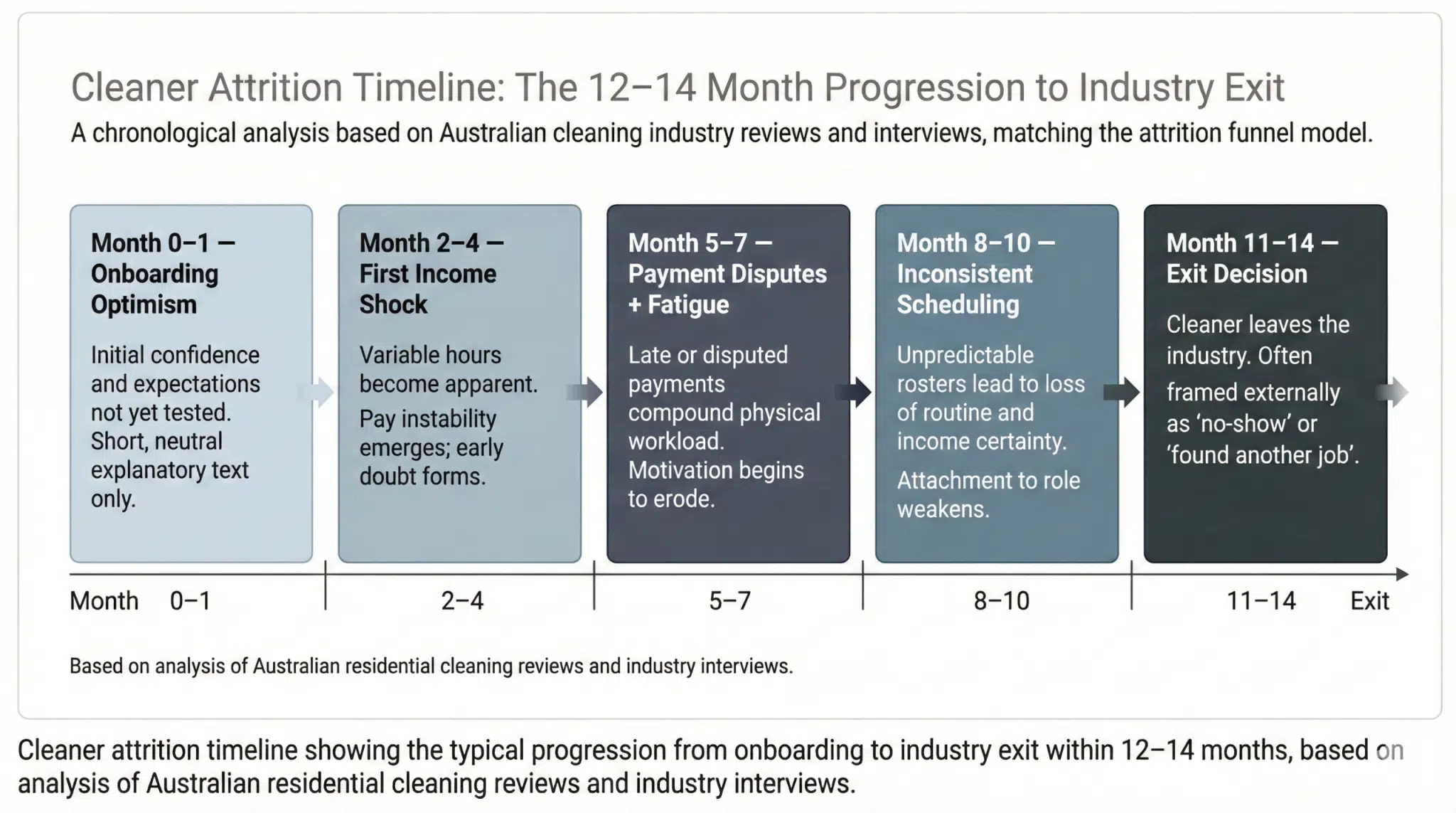
Many Australian cleaners are freelancers, working as independent contractors who are then hired by cleaning companies for individual jobs. At times, they’re treated like employees when it benefits the business, only to be abandoned when it doesn’t. This plays into the ‘disposable contractor model’ that’s prevalent across the cleaning industry.
From the very start, cleaners are hired quickly, given little guidance, and yet expected to perform to the highest standards. Unfortunately, many fall short of these expectations and raise concerns over preparation and guidance. From the company’s perspective, it is easier to replace a cleaner than to invest in training, since the high level of turnover is normalised in the industry.
This practice leaves cleaners feeling insecure, disposable, and demotivated to continue in the line of work. Without long-term committed cleaners, the industry as a whole is affected, and homeowners who hire professional cleaning services often end up bearing the brunt of it.
Under these circumstances, many cleaners leave the industry, not because they want to, but because the contractor system gives them the idea that they are temporary right from the start.
Lack of Training Pushes Cleaners Out
One of the reasons cleaners give up on their profession is that they don’t see opportunities for growth in the field. Beyond the basics, structured training programs for cleaners are not very common in the cleaning industry. At best, they are given a few instructions, handed a checklist, and sent out on a job. While experience does build skills, proper training is still essential, especially for growth.
Cleaners who start out as beginners have very little structure to improve their skills and expertise. Even when feedback is provided, it’s usually in the form of complaints as opposed to constructive criticism.
Without a clear path forward, even motivated cleaners start to feel like they are not progressing and, ultimately, wasting their time working in this industry.
Without Incentives, Motivation Drops
One of the biggest problems in the industry is that cleaners’ earnings rarely go up. In fact, many don’t see an increase from day one. While performance reviews do take place, they aren’t necessarily related to increments. Without incentives, cleaners become demotivated because working harder brings in more money for the company, but not for themselves.
When extra effort isn’t rewarded, cleaners either conserve their energy or exit the industry altogether. Some cleaners may stick around a little longer because of tips, but even that isn’t enough to sustain or motivate them long term.
How Cleaning Companies Pass Risk Down to Cleaners
One of the reasons why cleaners don’t last long in the cleaning industry is that the system is designed in a way that leaves them carrying more risk than the cleaning company that hires them. By avoiding responsibility, cleaners are left to face angry clients when issues arise.
Cleaners are often assigned to jobs without clear instructions or the support needed to meet clients’ expectations. Even worse, they’re expected to work within unrealistic timeframes, which increases pressure and the likelihood of complaints. we’ve spoken to cleaners who say they were scheduled for three to four two-bedroom end-of-lease cleans in a single day, with little room for delays or rework.
Over time, cleaners begin to feel unsupported, exposed, and disposable.
With no one to stand up for them, leaving the industry feels like the safest option.
The Constant Fear of Not Being Paid
One of the most stressful things for cleaners is not knowing when (or if) they’ll be paid. Many contractors work tirelessly and don’t get paid on time, or at all.
At MaidForYou, we’ve spoken to cleaners who came to us after their previous company simply disappeared without a trace. After completing thousands of dollars’ worth of work, the company was unreachable via phone and email. In fact, many businesses don’t have a permanent office address, making it easier to shut down overnight.
Unfortunately, this isn’t a one-off incident. If you take the time to read customer reviews, you’ll see a lot of negative feedback related to payment and operational issues. For example, Simply Maid’s ProductReview page includes multiple complaints about poor cleaning results, cancellations, cleaners not showing up, and management issues in general.
For cleaners living pay cheque to pay cheque, a delay in payment or no pay at all isn’t just frustrating; it’s incredibly stressful. Under these circumstances, staying in the industry starts to feel like a gamble rather than a job.
Why Career Progression Is So Difficult
Many perceive professional cleaning as a “dead-end job,” but that’s merely because of how the industry works. Very few businesses invest in helping cleaners progress in their careers, even though it benefits both parties in the long run. Instead, many companies adopt a ‘disposable contractor system’ because it costs them less.
Opportunities to grow and move into senior roles are almost non-existent with the way the industry currently runs. Many cleaners hope to progress to training positions, quality control, or operations; however, that can only happen when companies support contractors with regular training programs. Experience and responsibility may increase, but recognition and job titles don’t.
Cleaners don’t see a reason to work in the field long term when there is no visible potential for career growth or stability.
Burnout Caused by Inconsistent Scheduling
Another common reason why cleaners quit is due to burnout. The instability of inconsistent scheduling leads to an overload of work, which quickly takes its toll. The cleaning industry can be unpredictable at times; some weeks may be slow while others are packed with jobs.
Other than this, cancellations and last-minute bookings create an erratic schedule for cleaners, making it difficult to balance work and personal life. Fatigue builds even further when companies send contractors to far-off locations to complete multiple jobs in one day.
Apart from the burnout, earning potential constantly fluctuates, leading to financial stress. Over time, even motivated cleaners find themselves running on fumes, with no sense of peace.
Why High Turnover Damages the Entire Industry
The way the industry works doesn’t only affect cleaners, but customers too. With contractors being swapped out regularly, the quality of service provided becomes inconsistent. Not to mention the level of apprehension repeat customers feel when a new cleaner is sent to their home each time.
On top of this, businesses that recruit more than they retain have a harder time building trust among customers, which in turn makes it difficult for homeowners to find a reputable cleaning company. Ironically, these “cost-cutting” strategies end up hurting the business in the long run.
What Needs to Change
Fixing the cleaning industry doesn’t require anything major; just fairness, accountability, and long-term strategising.
Cleaners need:
- Payments on time
- Opportunities for career growth
- Training that builds confidence and skill
- Fair scheduling for a healthy work-life balance
At MaidForYou, we don’t believe cleaners are disposable. On the contrary, we spot potential and invest in training and support so cleaning teams can grow and sustain themselves while consistently providing high-quality service – it’s win-win!.
We’re constantly reinvesting in the well-being of our teams. Making sure they’re paid on time, paid as much as possible for the difficult work they do and feel valued and appreciated by all stakeholders within and associated with our business. Lower cleaner churn means we inevitably have no, no shows, more consistent service provisions and a higher quality of service overall when compared with our competitors.
That’s why cleaners working with MaidForYou stay with us for years and why you’ll always have the same team available to clean your home.
Final Thoughts
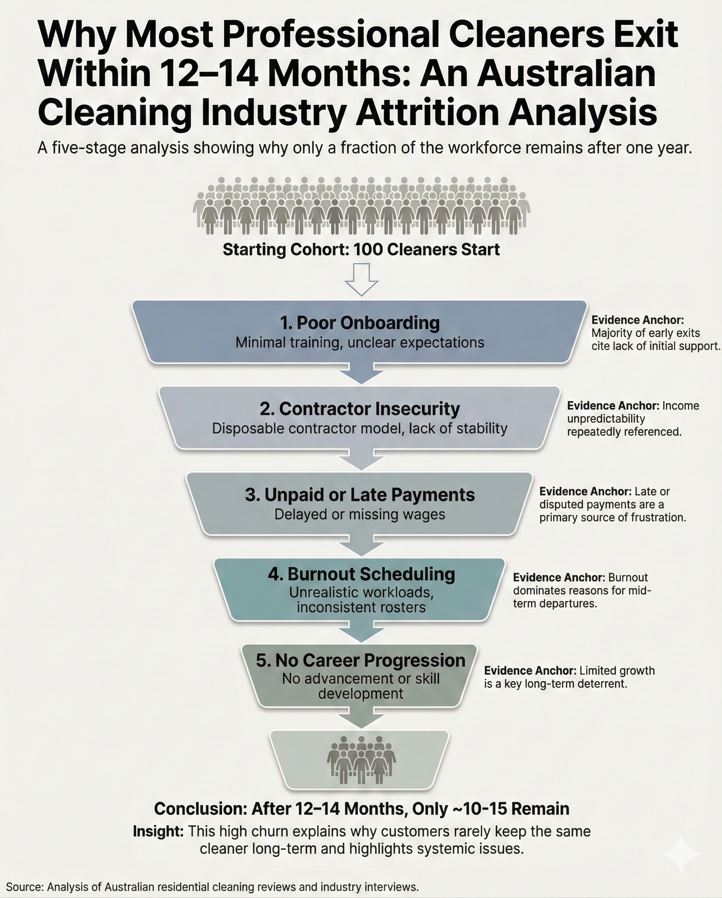
Most cleaners don’t leave because they can’t handle the work; they quit because the system isn’t designed for them to succeed. Until the economics are fixed, the cycle of cleaners exiting the industry within 4 months will continue.