
On this page
Part 6 of 8 in the floor cleaning series
The look, feel, and even texture of brand new flooring is incredibly satisfying. Sadly, that doesn’t last too long because wear and tear is inevitable. The good news, though, is that you can prolong the longevity and beautiful appearance of your floor with the right maintenance. Slate floors are no exception in this regard.
Although slate is a durable stone, it can be damaged in more ways than one. Unsealed slate, in particular, is more susceptible to damage and stains because the material is porous by nature. Nevertheless, if you need to know how to clean sealed slate floors, you’ve come to the right place!
Today, MaidForYou is sharing all the information you need to keep your slate floors looking as good as can be! Read on.
How Often Should You Clean Slate Floors?

Well, like any household flooring, regular cleaning is important if you want the surface to be clean and look its best. With sealed slate floors, it should be noted that gritty debris (when left on the surface) can cause scratches on the finish due to foot traffic. This, in turn, wears the sealant, and makes the floor appear dull over time.
Stains on slate floors can also become difficult to remove if left on the surface for too long. With that in mind, experts recommend daily sweeping or vacuuming to keep dirt and fine debris off the floor; washing or mopping slate, on the other hand, can be limited to 2-3 times a week. Of course, one should make it a habit to spot-clean stains as and when they occur to eliminate the possibility of permanent staining. It is also a lot easier to tackle fresh stains on slate floors as opposed to those that have been sitting on the surface for too long.
What You’ll Need to Clean Slate Floors

As mentioned earlier, cleaning slate floors with the right cleaning products and tools is important for achieving a satisfactory and damage-free result. So, before you begin, ensure that you have the following things at hand:
- Broom/vacuum cleaner
- Spin mop and bucket
- Commercial slate cleaner or dish soap
- Warm water
- (Lint-free) soft cloth/towel
How to Clean Sealed Slate Floors
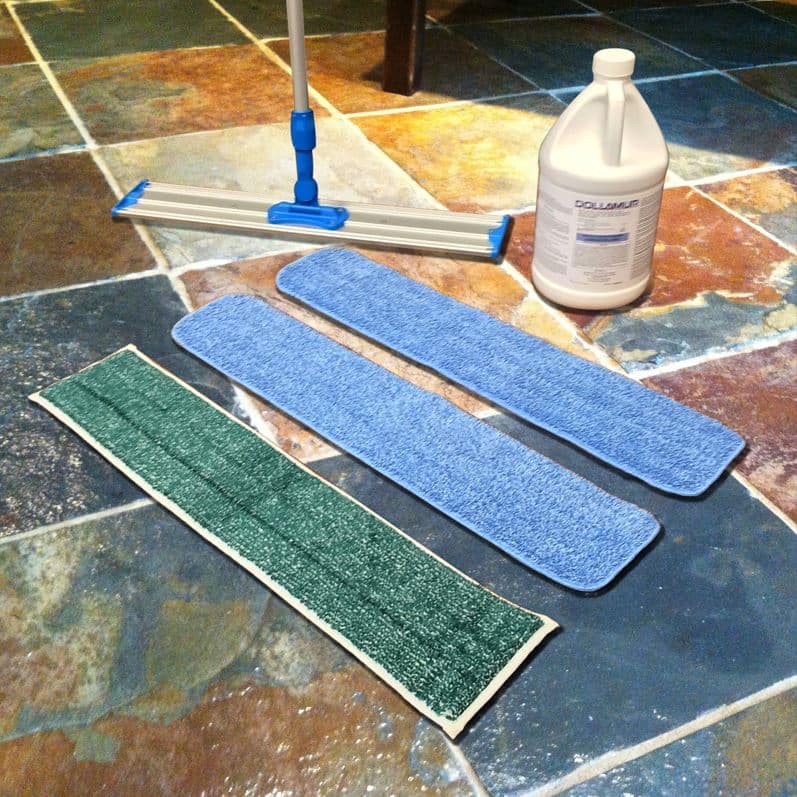
When it comes to cleaning slate floors, the order in which you do things is just as important as how you do them. This will directly affect the end result so you will want to follow a step-by-step guide to ensure that you are getting it right the first time around!
Here are the instructions to clean slate floor tiles.
Sweep/Vacuum the Floor
The initial cleaning is perhaps the most important because, if you don’t do a thorough job at this stage, the rest of the cleaning will remain average, at best. Here, you want to get the surface as clean as possible by removing loose dirt and fine debris. This can be done with a broom or vacuum cleaner. Many professional cleaners advise using a dust mop to remove surface dirt from slate flooring, however, either of the aforementioned cleaning tools will suffice.
If you choose to vacuum your slate floor, be sure to use a soft brush attachment, and switch the vacuum cleaner to the setting intended for hard floors. A good tip to keep in mind when vacuuming slate flooring is to slowly glide the vacuum head over joints or grout lines as this is where dirt and debris often accumulate.
Make the Floor Cleaner
While there are commercial slate cleaners that you can buy online or at a store, you can easily make an effective, surface-appropriate DIY cleaning solution for your slate floors. Since gentle cleansers are advised, a good rule of thumb is to make the cleaning solution very mild before gradually strengthening it, if needed.
When using a store-bought product, pay close attention to the instructions on the label; for a DIY cleaning solution, on the other hand, fill up a bucket with warm water, and mix in ¼ cup of liquid dish soap. Before you use the cleaning solution, give it a good stir to mix the soap and water.
Damp Mop the Floor
Consider using a spin mop as it is easier and quicker to squeeze out the extra water. Avoid washing your slate flooring with a dripping mop as saturating the material can lead to water stains if there are cracks in the seal. When the mop is properly wrung, glide it across the slate tiles from side to side, and keep an eye out for dirty smears on the floor. When this happens, you either need to rinse the mop head, or replace the cleaning solution with a fresh one.
It’s also a good idea to steam clean slate floors every 3-6 months to give it a deeper cleanse. Not only will this help rid the tiles of stubborn stains and refresh its appearance, it will also kill bacteria and sanitise the surface.
Dry the Floor
As we mentioned earlier, water or moisture can penetrate the porous material if the sealant is damaged or worn out. This, in turn, can cause stains and water damage to the slate tiles. Additionally, freshly mopped slate flooring can develop water streaks if moisture is left to air-dry. Therefore, to eliminate any potential damage and water marks on your floor, use a clean, dry towel to wipe the floor tiles immediately after mopping.
With that, your slate floor will be wiped clean, and look and feel amazing again! You can also go one step further to buff slate tiles with teak oil, however, this is optional, and is only recommended if you want to add more sheen to the surface. Otherwise, we offer a professional tile cleaning service that will have your slate tiles looking brand new.
| Task | What to do | Avoid |
|---|---|---|
| Daily dirt and grit | Sweep, or vacuum with a soft brush on the hard-floor setting | Leaving grit to scratch and wear the sealant |
| Mopping, 2 to 3 times a week | Warm water with 1/4 cup dish soap, or a slate cleaner | A dripping mop that saturates the slate |
| Fresh stains | Spot-clean as soon as they happen | Leaving stains to set in |
| After mopping | Dry straight away with a clean, dry towel | Air-drying, which leaves water streaks |
| Deeper clean | Steam clean every 3 to 6 months | Letting moisture sit where the sealant is worn |
When to call a professional
Slate that still looks dull and grimy after routine sweeping and mopping, especially along the grout lines, usually needs a thorough professional clean. Worn or cracked sealant is a different job: a stone or tile restorer can reseal the floor so moisture stops getting in and staining it.